
Develop Knowledge and Skills For Sustainable Revenue Growth
The People Capabilities Required to Create, Use, and Improve Revenue Growth Infrastructure With Precision.
Revenue Growth Infrastructure Is Only as Effective as The People Responsible For It
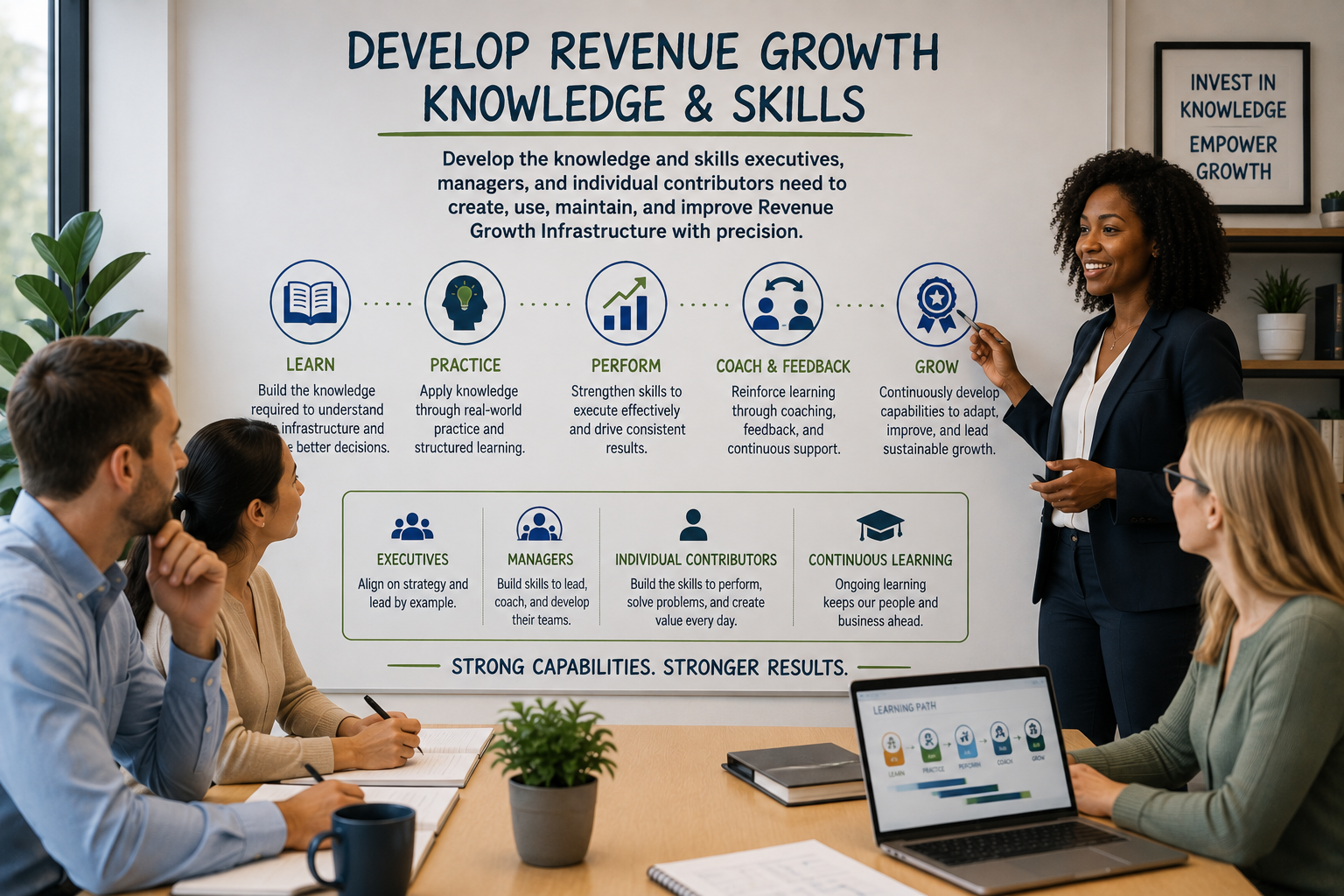
Strengthening Revenue Growth Infrastructure isn't enough. Executives, managers, and individual contributors must also have the knowledge and skills required to fulfill their responsibilities with precision.
As Revenue Growth Infrastructure evolves, the knowledge and skills required to create, use, manage, and improve it must evolve with it.
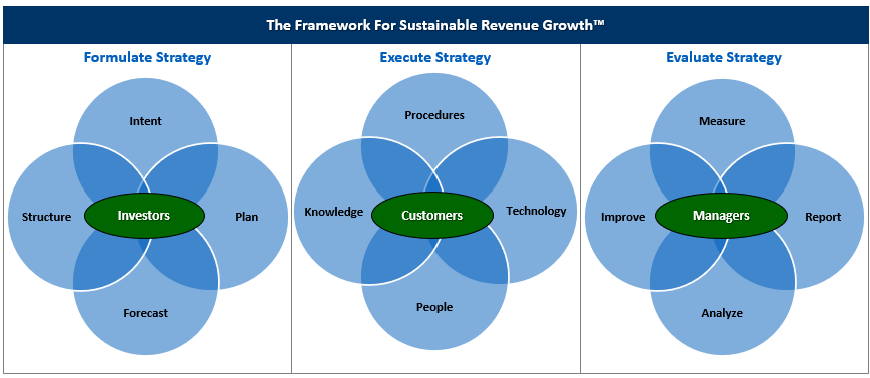
The Framework For Sustainable Revenue Growth™ Defines What People Need to Know and Do
The knowledge and skills people need are determined by the Revenue Growth Infrastructure they are responsible for creating, using, managing, and improving.
The Framework organizes these requirements across three areas:
- Formulating revenue growth strategy including forecasts, plans, organization structure, and mission, purpose, vision and strategic initiatives.
- Executing revenue growth strategy including procedures, people management practices, technology enables, and knowledge transfer.
- Evaluating revenue growth strategy including data fields and collection, analysis and recommendations, reporting, and process improvement.
As responsibilities change, the knowledge and skills required to fulfill them change too.
Why Doesn't More Learning & Development Produce Sustainable Revenue Results?
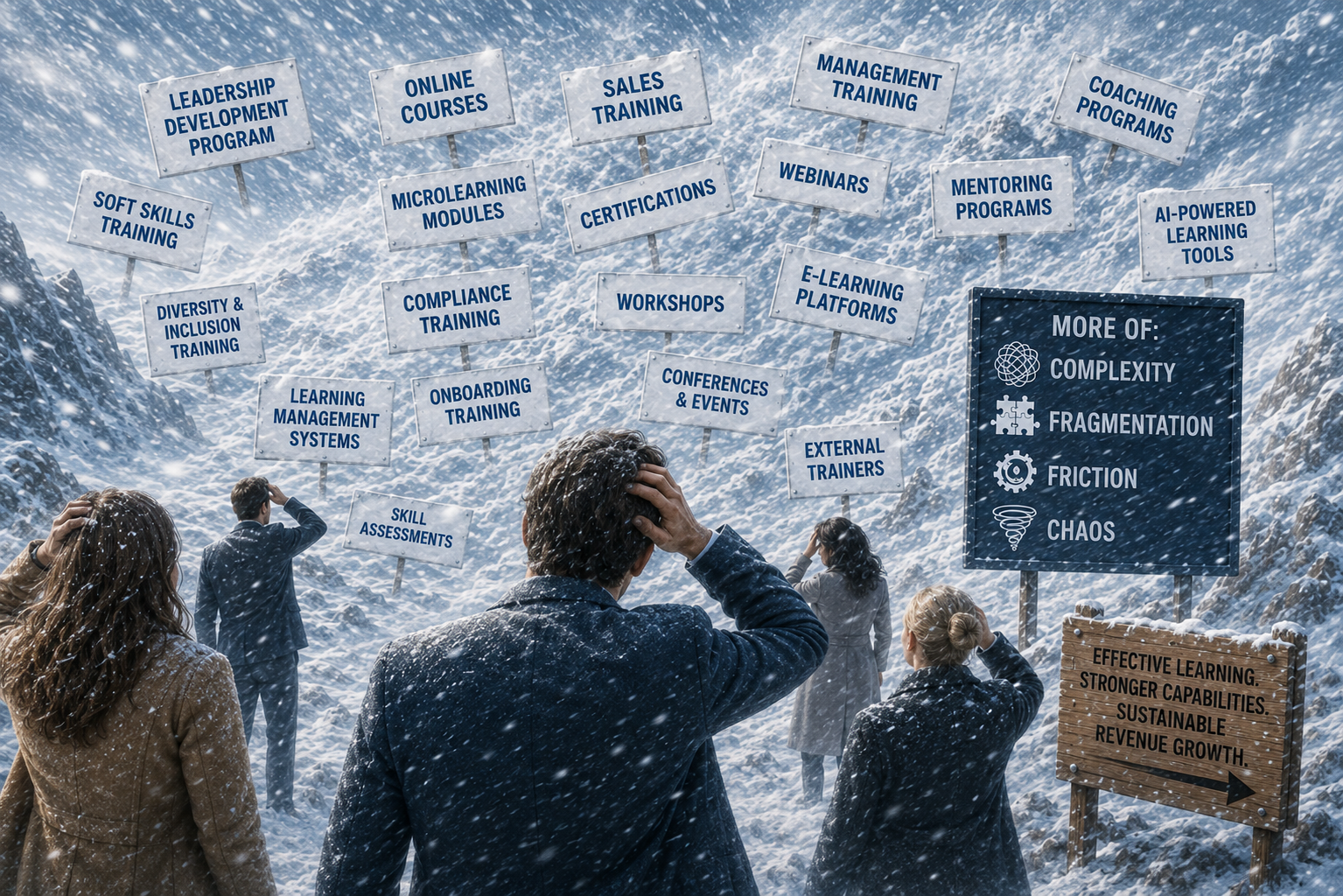
The Blizzard of Revenue Growth Learning and Development Solutions™
Organizations invest heavily in training, coaching, leadership development, online learning, certifications, and other programs intended to improve performance.
But every hour executives, managers, and individual contributors spend developing the wrong knowledge and skills is time away from customers, new business, innovation, and other revenue growth priorities.
Even good programs can waste time and money when they aren't a priority, aren't aligned with Revenue Growth Infrastructure, or are implemented at the wrong time or in the wrong sequence.
How Much Time, Money, and Attention Are You Investing in Development That Isn't Building the Capabilities Your Organization Needs?
How The Four Revenue Growth Antagonists™ Impact Knowledge & Skill Development
Well-intentioned investments in training, coaching, leadership development, online learning, and other development programs do not automatically create the knowledge and skills required for sustainable revenue growth.
Over time, Complexity, Fragmentation, Friction, and Chaos can develop when organizations lack a shared frame of reference for determining what people need to know and do, assessing existing capabilities and development programs, sequencing learning according to prerequisites, and synchronizing development across the organization.
The result is a growing collection of learning and development activities that may improve individual knowledge and skills but fail to systematically build the organizational capabilities required to operate Revenue Growth Infrastructure to make sustainable revenue growth possible.
Your Revenue Growth Navigator™ Guides You Through The Three Steps
Build the right capabilities, for the right people, at the right time.
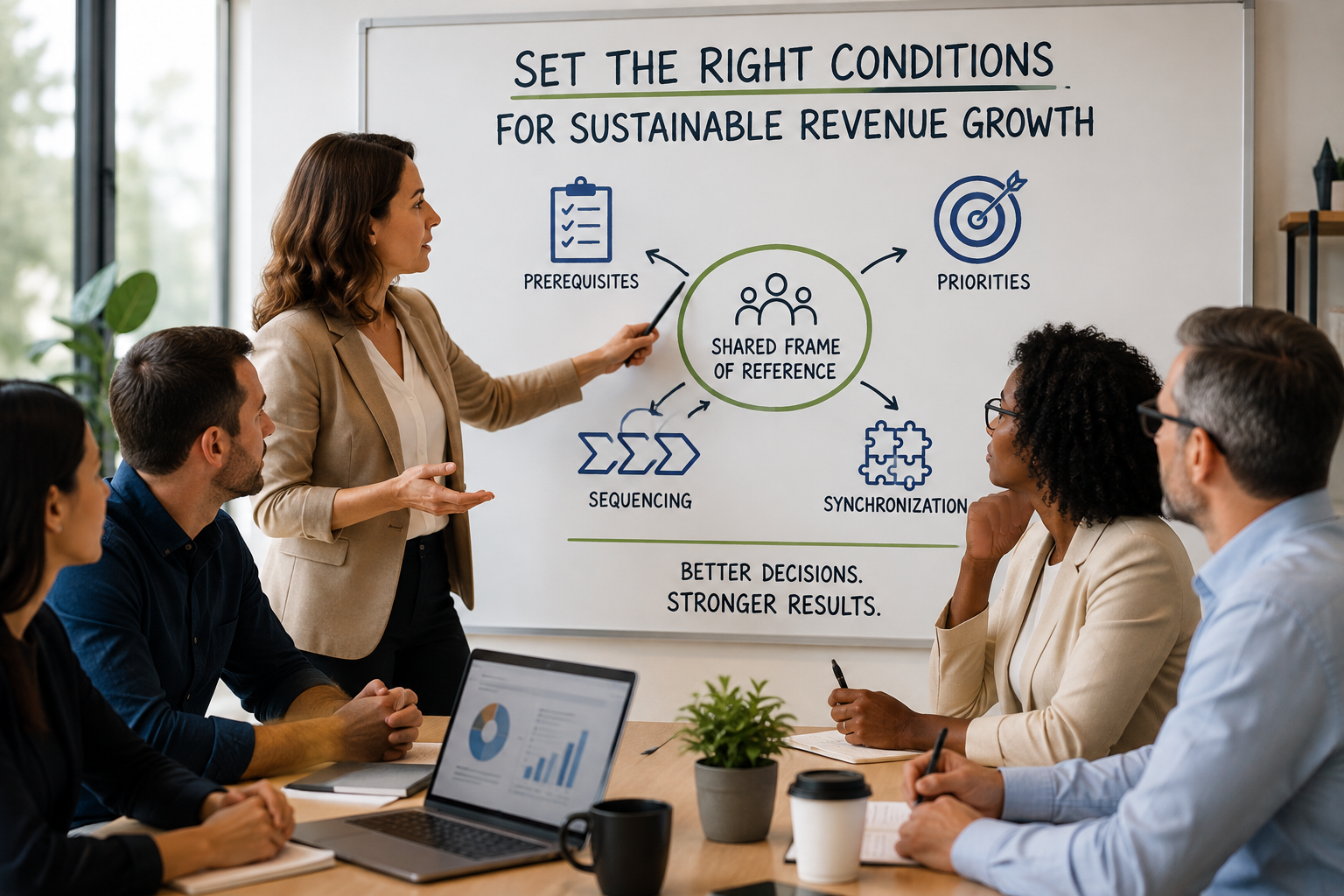
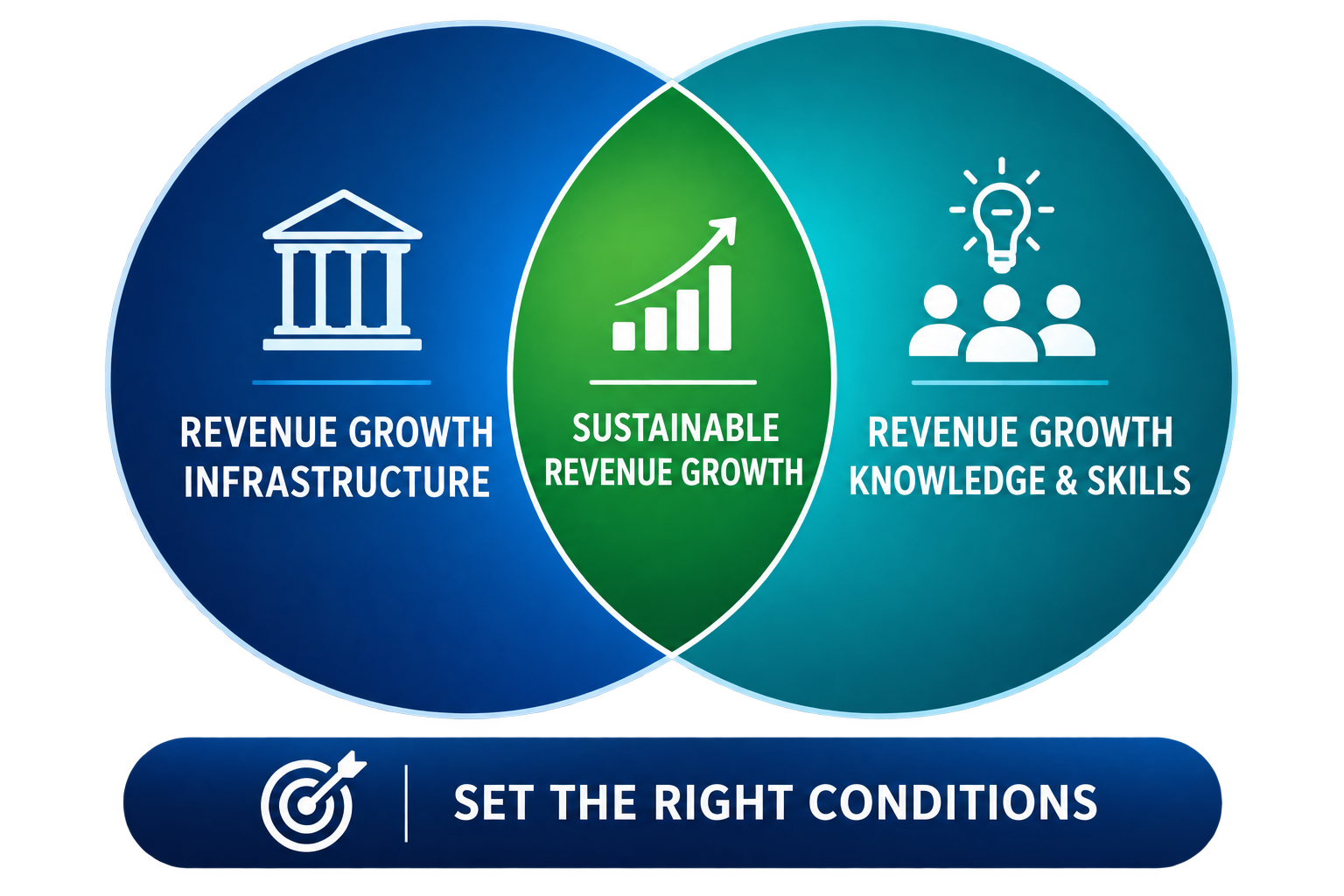
Set The Right Conditions For Knowledge & Skill Development
Establish the shared frame of reference, priorities, prerequisites, sequencing, and synchronization required to make better knowledge and skill development decisions to achieve sustainable revenue growth.
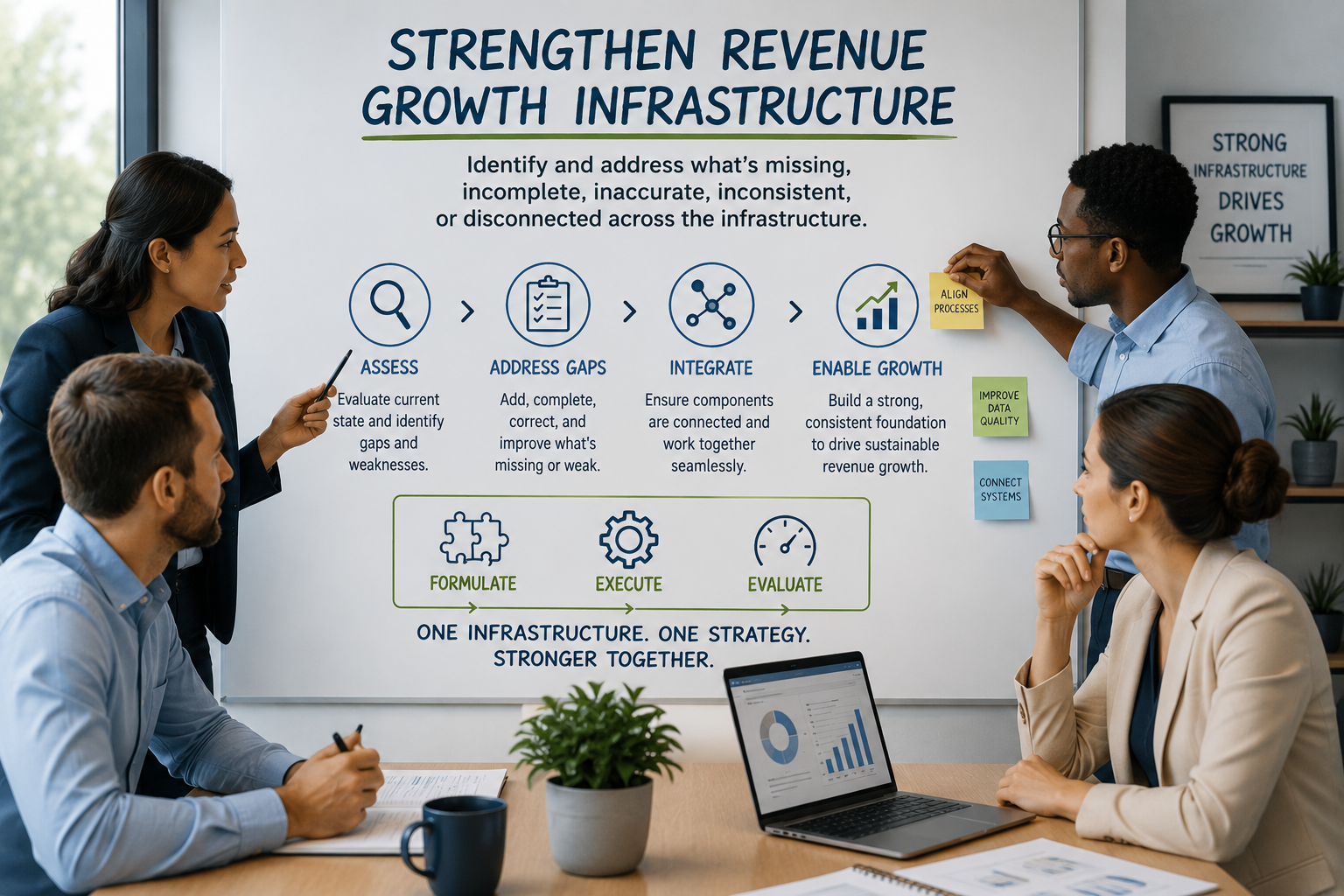
Strengthen Knowledge and Skill Programs For Revenue Growth
Add, complete, correct, improve, and integrate the knowledge and skill development programs required to create, use, and improve the Revenue Growth Infrastructure required to achieve sustainable revenue growth.
Develop Individual Knowledge & Skills For Revenue Growth
Assess individual capabilities, identify gaps, establish development priorities, and systematically build proficiency to operate the Revenue Growth Infrastructure required to achieve sustainable revenue growth.
Ready to Strengthen Your Revenue Growth Knowledge & Skill Development?
Let's discuss what your organization needs, what you already have, and where to start.
Step 1 — Set the Conditions for Revenue Growth Knowledge & Skill Development
Before investing in additional development, establish the conditions required to make better decisions about what people need to learn, who needs to learn it, what should come first, and how development should be coordinated.
Condition #1 - Establish a Shared Frame of Reference
Establish a common understanding of Revenue Growth Infrastructure and the knowledge and skills required to build, operate, manage, and continuously improve it.
Condition #2 - Assess Readiness
Evaluate existing learning and development programs, resources, methods, and capabilities against the Revenue Growth Knowledge and Skills required by the organization's Revenue Growth Infrastructure.
Condition #3 - Sequence Improvements
Determine which learning and development programs need to be added, completed, corrected, improved, or integrated—and establish the prerequisites and sequence for doing so.
Condition #4 - Synchronize Execution
Coordinate Revenue Growth Knowledge and Skill development horizontally across departments and functions, vertically across organizational levels, and with HR programs and Revenue Growth Infrastructure improvements.
Step 2 — Strengthen Your Knowledge & Skill Development Programs For Revenue Growth
Most organizations already have programs and resources for developing people—onboarding, training, coaching, mentoring, online learning, leadership development, internal experts, certifications, and external providers.
The objective isn't necessarily to replace them. It's to add, complete, correct, improve, integrate, sequence, and synchronize them around the knowledge and skills your organization actually needs.
New Hire & New Role Development Programs
Prepare newly hired, promoted, or transferred employees with the Revenue Growth Knowledge and Skills required to become proficient in their roles.
Performance Improvement Development Programs
Address Revenue Growth Knowledge and Skill deficiencies contributing to underperformance and support individuals operating under formal or informal performance improvement plans.
High-Potential Leader/Succession Planning Programs
Identify and systematically develop individuals with the potential to assume greater responsibilities or more complex roles.
Continuing Revenue Growth Development Programs
Continuously strengthen and update the Revenue Growth Knowledge and Skills of executives, managers, and individual contributors as Revenue Growth Infrastructure, responsibilities, technologies, markets, and ways of working change.
Step 3 — Develop Individual Revenue Growth Knowledge & Skills
Organizational development programs only create value when they improve what people actually know and are able to do.
Assess the knowledge and skills each person needs for their current or future responsibilities, identify gaps, and systematically develop the proficiency required to perform with precision.
Assess Individual Knowledge & Skills
Assess the individual's existing Revenue Growth Knowledge, Skills, and experience against the requirements of their current or prospective role to identify strengths, gaps, and development priorities.
Create Individual Development & Career Plans
Translate identified gaps and future career objectives into a personalized development plan that defines what the individual needs to learn, the proficiency they need to achieve, and the sequence in which development should occur.
Sequence Learning & Development Programs for Individuals, Cohorts, and Teams
Develop Revenue Growth Knowledge and Skills according to prerequisites and increasing levels of proficiency so foundational capabilities are established before more advanced capabilities are introduced.
Synchronize Learning, Coaching & Application
Coordinate self-paced learning, training, coaching, mentoring, practice, feedback, and on-the-job application so individuals can apply and reinforce what they learn while performing their responsibilities.